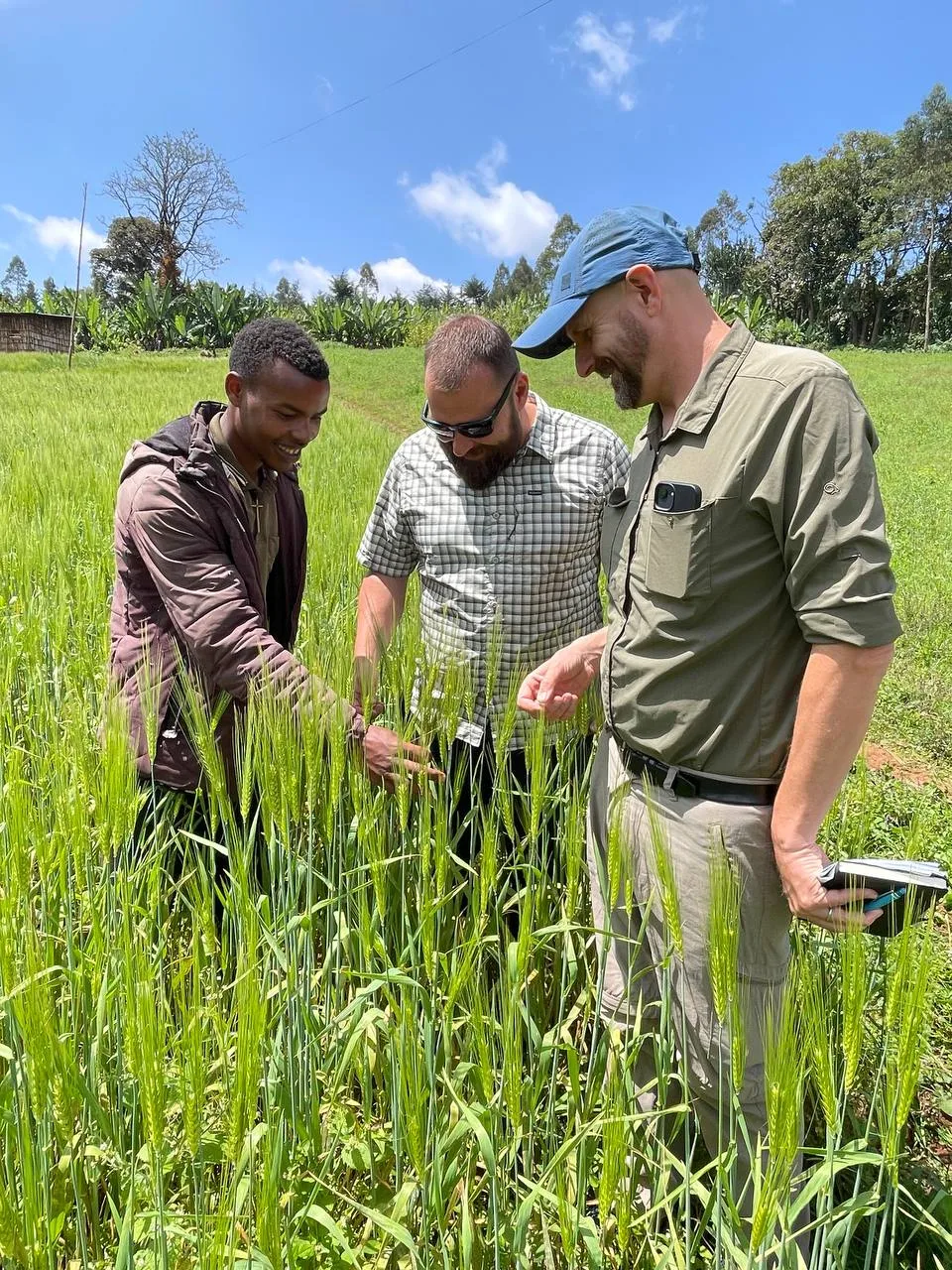
Tadele Nigatu, a father of two living in the Dimtu Tora area, is demonstrating how modern agricultural training combined with essential input loans can transform a smallholder farm into a launching pad for family development and improved living conditions.
As a barley beneficiary under the Integrated Actions for Building Resilience in Communities project—implemented by the Ethio Wetlands and Natural Resources Association (EWNRA) with financial backing from Menschen für Menschen–Switzerland (MfM-CH)—Tadele received a crucial agricultural package to upgrade his farming practices.
The project provided him with an input of 50 kg of improved, high-yielding barley seed, alongside essential fertilizers consisting of 50 kg of Urea and 50 kg of DAP.
Crucially, the intervention paired these physical inputs with capacity building. Tadele participated in dedicated project trainings focused on advanced barley crop management. Putting his new skills into practice, he moved away from traditional broadcasting and sowed his field using precise row-planting techniques.
The combination of premium seeds, balanced fertilization, and proper management has set up a highly successful season. Tadele is now confidently expecting a harvest of 15 quintals of barley, carrying an estimated market value of ETB 100,000.
Tadele is already channeling this anticipated agricultural windfall into a structured plan for his family’s future stability and growth:
- Housing Improvement:
With a clear eye on improving his family’s quality of life, Tadele has already planned to build his own permanent house using the revenue generated from this bumper barley production. - Responsible Family Planning: Balancing family size with economic capabilities, Tadele and his spouse have decided not to add more children to their family, consciously managing their family planning in alignment with their available household resources.
Tadele’s success illustrates the core objective of the EWNRA and MfM-CH project.
By equipping farmers with both the modern skills and the quality agricultural inputs they need, the intervention allows rural households to break free from subsistence constraints, build stable homes, and confidently manage their own futures.