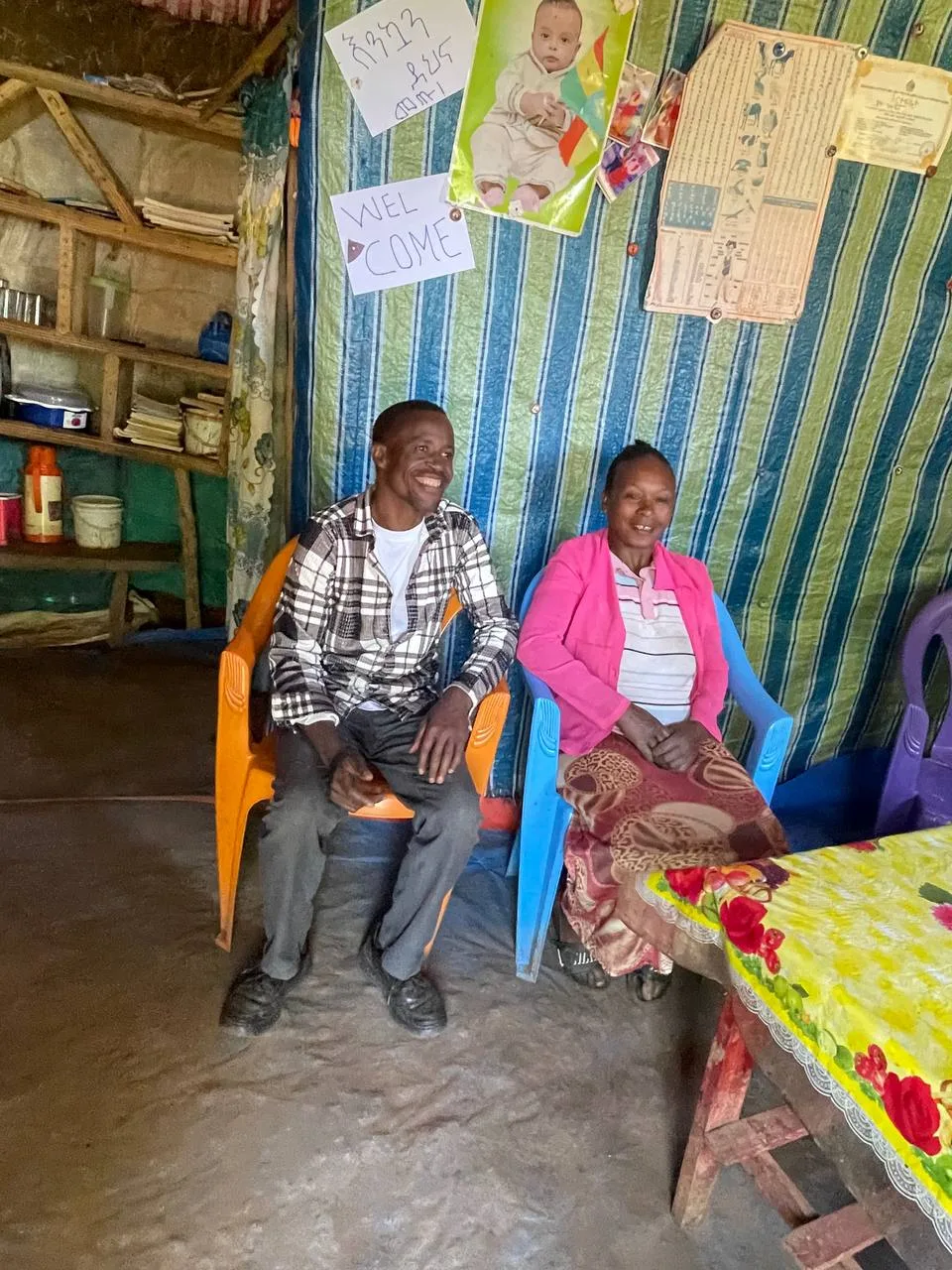
On the fourth day of the field monitoring visit, a powerful success story of economic and social transformation emerged from Dereto Kebele, showcasing the profound impact of the Gender Model Family (GMF) initiative under the “Building Sustainable Livelihood” project. Funded by MfM-CH and Implemented by EWNRA, the intervention has successfully reshaped household dynamics and accelerated economic growth for the family of Samuel Kipo and Genet Samuel.
The family of six, including four children, became project beneficiaries in 2025. Their path toward sustainable growth features several key milestones:
- Gender Transformation & Shared Labor: After completing a one day sensitisation and 3-day GMF training course in May 2025 focused on gender equality, the couple completely overhauled their domestic roles. Samuel Kipo has broken traditional barriers, helping his wife every morning to prepare the children for school and sharing all household chores. Genet Samuel noted that the collaborative lifestyle has “lifted a huge burden” from her shoulders.
- Joint Financial Decision-Making: A core element of the training focused on joint household decision-making, which paved the way for highly successful multi-tier micro-businesses.
- Explosive Capital & Micro-Credit Growth: Utilizing the project’s financial savings infrastructure, Genet Samuel secured a 10,000 Birr loan from a local SACCO to launch a shoe-trading business. Through strategic management, she has exponentially expanded that initial credit line into an impressive 50,000 Birr in active capital.
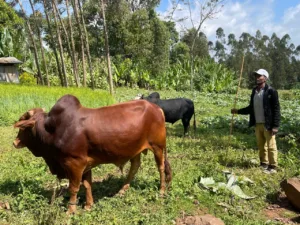
- Agricultural & Commercial Diversification: Backed by their shared savings, the family purchased two oxen for a targeted livestock fattening business. Added many sheep for rearing. Concurrently, Samuel Kipo utilised improved agricultural methodologies to better manage the family farm—projecting a doubled harvest income this season—while generating significant profits through local coffee trading.
- Community Scaling: The children are now fully integrated into daily household activities, and the family’s transformation has positively influenced neighboring households and relatives. Recognized as a progressive leader, Samuel Kipo now serves as a model man, sharing his behavioral and economic experiences with Woreda-level visiting delegations.
This field assessment highlights how integrating social equality frameworks with micro-finance tools enables rural households to break structural dependencies, build solid commercial assets, and achieve true livelihood resilience.